


Al-Entkhbat Game
Play it right
General Rules
What is the game?
A strategy game where candidates (the players) compete for the most votes. Each candidate collects vote cards and places them across their regions to strengthen their position in the electoral arena.
Player count
The game is designed for 3 to 6 players, plus a referee who runs the game.
The referee's role
Manages the results record (the "Register"), applies the rules and regulations, and holds the authority to impose penalties on players.
How do you win?
Collect the most votes by drawing them from the card bank and placing them on your regions, or by completing a "Deal" with other candidates.
The highest combined total at the end of the final electoral cycle wins.
How to Play
From dealing to the end of the cycle (8 steps)
-
1 Each candidate gets a number of regions based on the player count, chosen or dealt▼
-
2 Shuffle the deck (70 action cards and 79 vote cards)▼
then deal 5 cards to each candidate -
3 Place the remaining cards in the "card bank" at the center of the play area▼
-
4 The first candidate starts by drawing two cards from the card bank▼
-
5 Play proceeds from the first candidate, with turns continuing in order to the right▼
-
6 Each candidate has 3 moves per turn▼
-
7 An electoral cycle ends when the card bank runs out or a Final Command is played▼
-
8 The number of electoral cycles equals the number of candidates; with 5 candidates, the game consists of 5 cycles, as shown below
Regions per player
Varies with the number of candidates

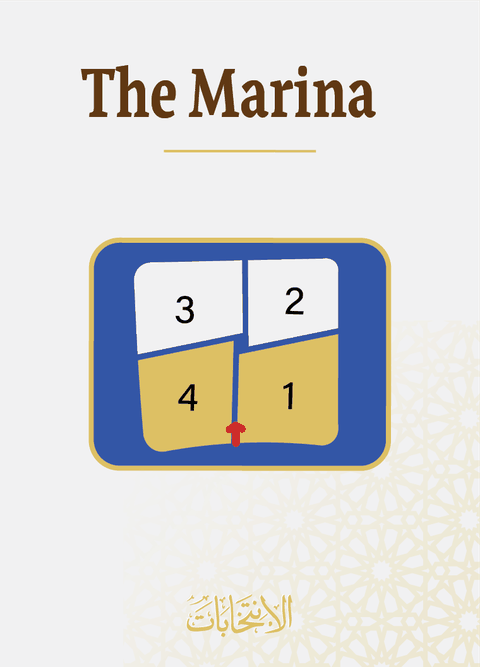


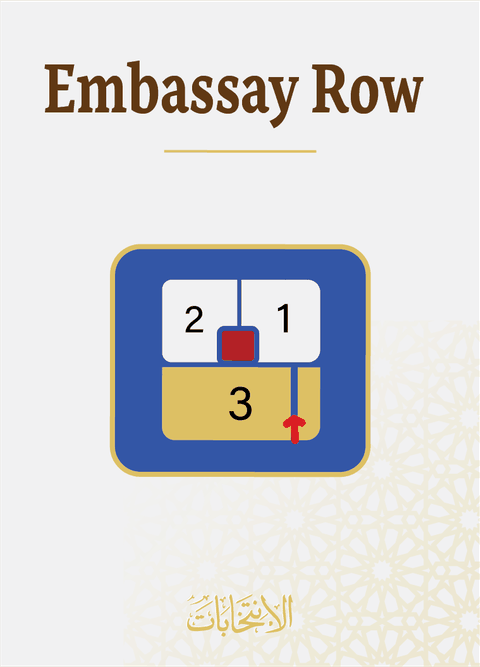

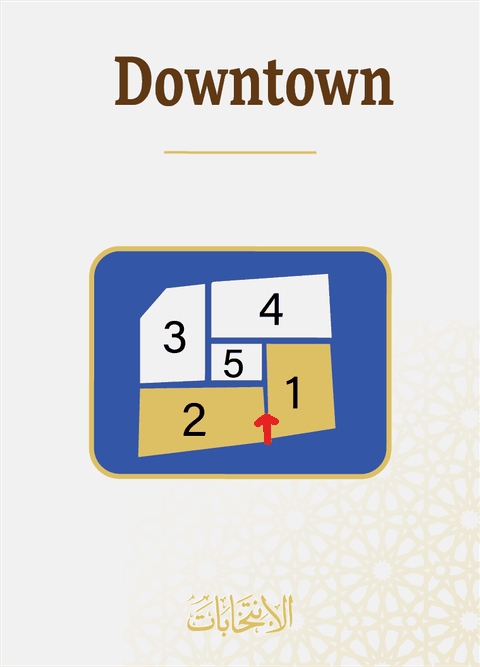

Game Cards
174 cards across 3 categories
Action Cards
70 cardsVote Cards
79 cards
Region Cards
Chosen or dealt to players before the game begins
Ready to play?
Track scores with our scoreboard app,
the referee's official register
Card Groups
Action cards are grouped by how they take effect
This covers what the card text alone does not. Anything not mentioned here: the card text is the rule.
General Commands
Played on your turn. They can be answered with Tough Luck, Objection or Tit for Tat, unless stated otherwise.

- The target loses their next turn entirely: they do not draw 2 cards or play.
- They keep the right to reply to attacks.
- They may accept a Deal offered to them.
- They may not step into someone else's Deal.
- If the card is reflected, the attacker loses the rest of their turn at once.

- Each side picks their region, and the total of the two regions is recorded at once (Article 14).
- A candidate may make more than one Deal, including with the same partner.
- The region must have at least one vote card on it, even a Zero Votes card.
- A recorded Deal is not affected by what happens after it.

- The card is played first, then both sides swap all their hand cards, however many.
- It may be played as the last card in your hand.
- It may be played more than once in the same turn.
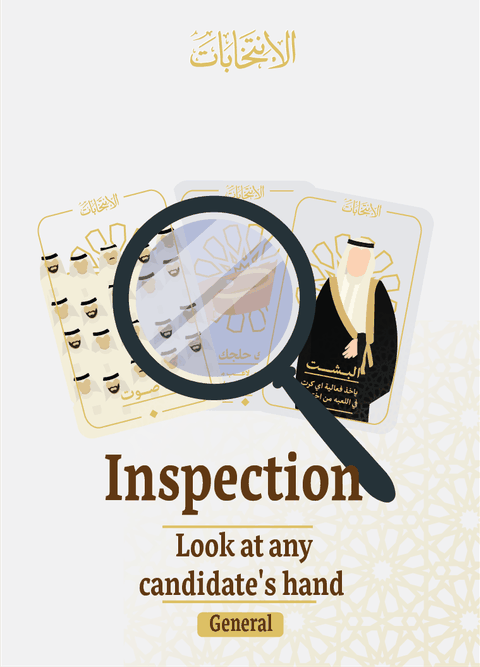
- The card's holder sees the target's hand, alone.
- Revealing what they saw is a violation (Article 30).

- The target may not speak or make any sound for 3 of their turns.
- They play by signals, and the referee interprets their signals.
- Every breach is penalised (Article 30).
- If it is played on them a second time, the time is extended.
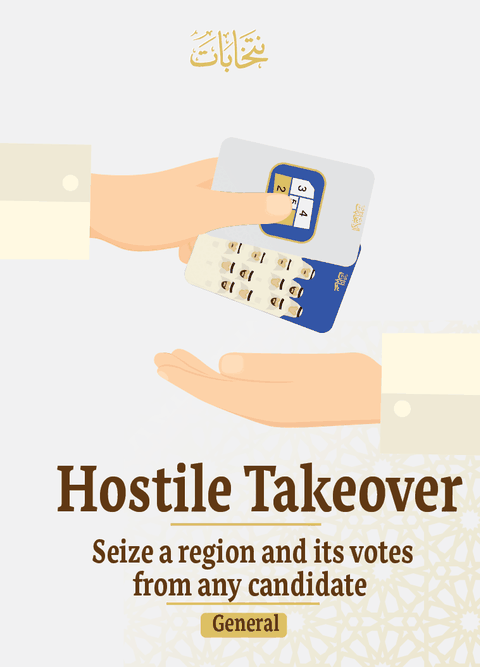
- You take a whole region with everything on it until the end of the cycle (Article 16).
- A closed region cannot be taken.
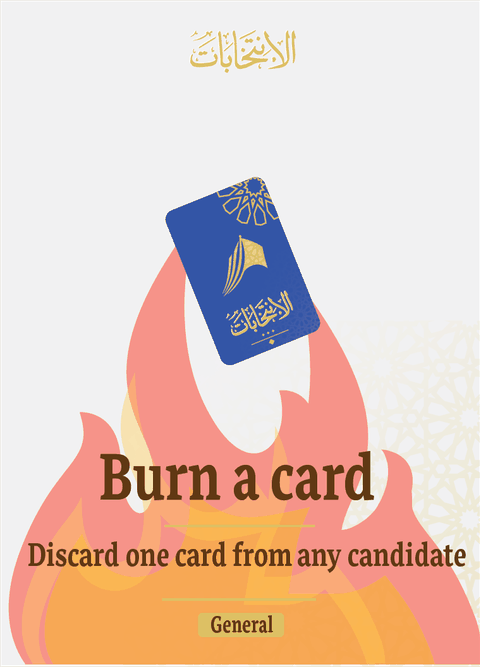
- The target fans out their hand face down, and the attacker draws one card without seeing it.
- It does not reach cards fixed on the table.

- The burn follows Article 17.
- If the card is reflected, the attacker burns the same amount from their own votes.

- Burns the target's Immunity.
- Does not lift Restraining Order.

- All candidates vote; the referee does not.
- The target is expelled by majority; on a tie they stay.
- The expelled candidate is out until the next cycle.
- Their region votes and hand cards burn; only their Deals remain.
- Does not work in the first or last electoral cycle.
- Immunity against one candidate until the end of the cycle, recorded by the referee.
- One way: they do not attack you; you attack them and they may defend.
- Does not block a Deal between you, because a Deal is not an attack.
- Protects you from Filing Fees they play.

- Each candidate hands over vote cards from their regions totalling 100 or more, as they are.
- The card's holder spreads them across their regions, and this does not count as a move.
- They do not rearrange their earlier votes.
- Anything with no place to go burns.
- Each candidate defends only themselves.
- The card's holder may reply with Tough Luck to everyone who replied to them.
- A candidate sitting out with Jail Time pays.
- Candidates who resigned, were expelled, or hold Immunity do not pay.
Reaction Commands
Played outside your turn and do not count as a move.

- Played by a third candidate during the negotiation, cancelling the Deal entirely.
- The Deal card burns on its owner and counts as a move against them.
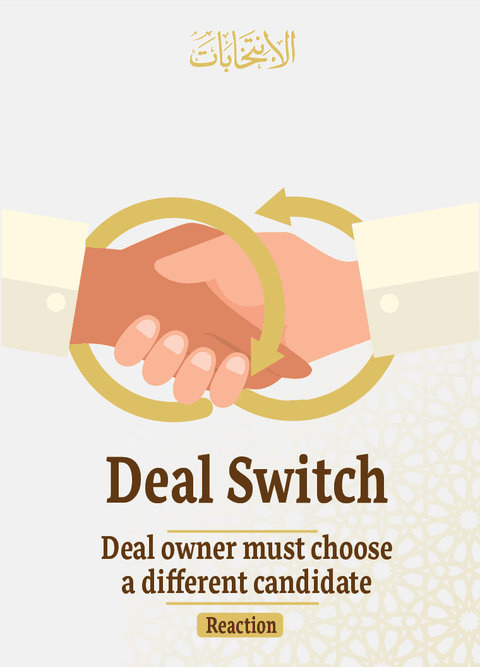
- Played by a third candidate during the negotiation.
- Blocks the Deal with the candidate it was offered to, in that move only.
- The deal owner keeps their card and must offer it to another candidate in the same move.
- If no one accepts, their card burns as if it were refused.

- Cancels a General Command or a Reaction aimed at you.
- Not played on Personal or Final Commands.
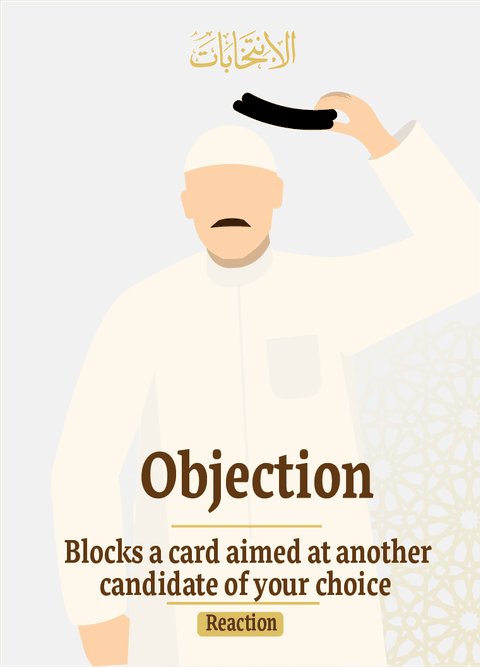
- It is a Tough Luck you play for another candidate, not for yourself.
- If two are played at the same moment for the same side, one counts and the other burns.

- Reflects the General Command back on the attacker.
- Whoever reflected it makes the choice, if the card gives one.
Personal Commands
Played on your turn and cannot be answered.

- Protects its holder from all attacks for 3 full rounds.
- It drops when their turn comes back in the fourth round.
- It does not protect them if they attack.
- If they offer a Deal, it cannot be broken or switched.
- It is placed in front of them and is removed only by Lift Immunity.
- It does not lift an earlier restriction on its holder, such as Restraining Order.
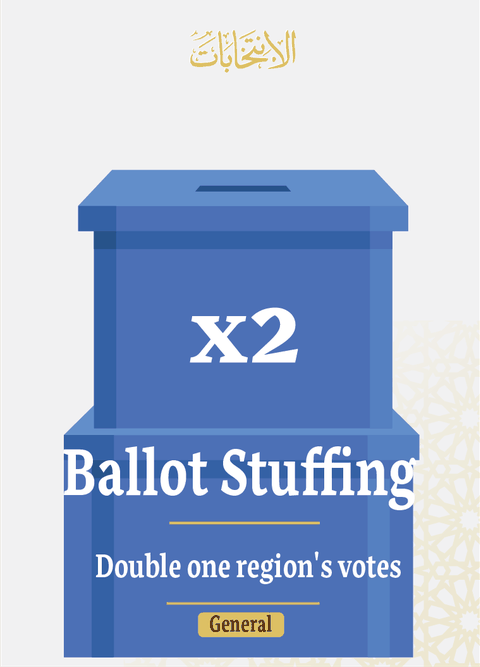
- Fixed on a region, so its votes count double at the count and in a Deal.
- This includes votes added to it later.
- It cannot be moved to another region once fixed.

- Fixed on a region, protecting it from vote burning only.
- It may be combined with Ballot Stuffing on the same region.

- Its holder alone sees the full results board on the referee's screen, for 60 seconds.
- They may not reveal anything they saw.
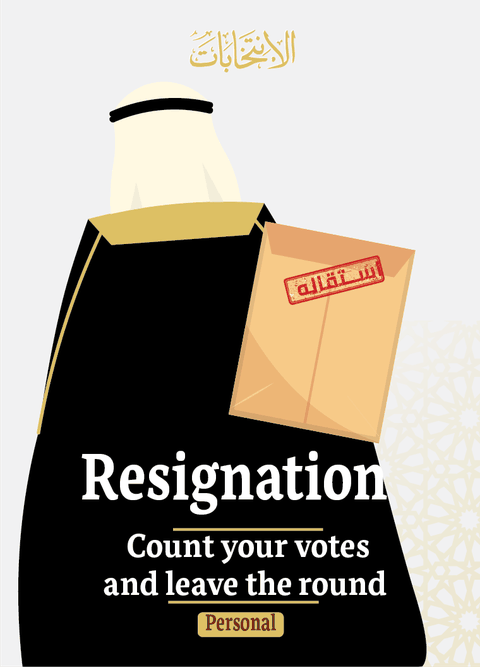
- The votes on its holder's regions are recorded at once, and they leave the cycle.
- They cannot be targeted, and they do not draw or play.
- Their hand cards burn.
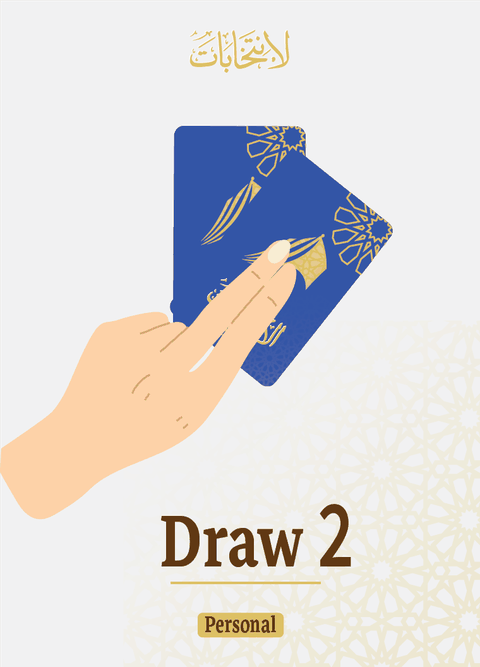
- Counts as a move.
- If the card bank runs out, the player finishes their turn, then the electoral cycle ends.
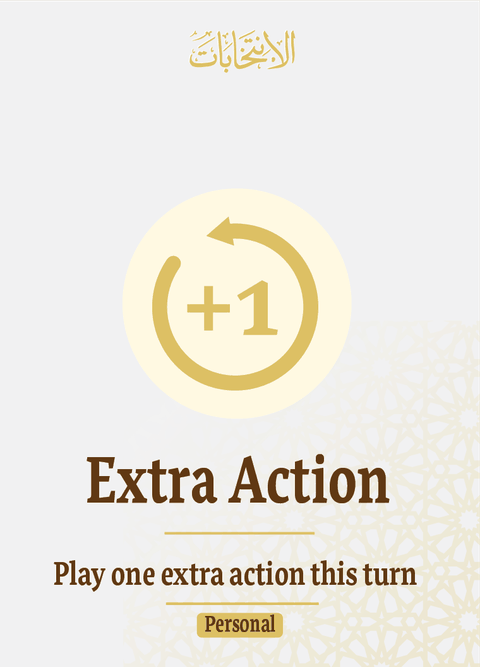
- A fourth move in the same turn.
- Playing it does not count as a move.
- Played before the 3 moves are used up.
- More than one may be played.

- Take any card from the play area into your hand.
- Counts as a move.
Final Commands
End the cycle as soon as they are played, and cannot be answered. They do not work in the first or last electoral cycle.

- Everyone's ballots are counted as they are and recorded.

- Zero is recorded for everyone.
- Recorded Deals and the results of anyone who resigned stay.
Joker
A special card that copies the effect of any other card in the game, chosen by the player when used

- Its holder announces which card it becomes, and that card's rules apply in full.
- It can be a General Command, a Reaction, a Personal or Final Command, or a vote card of no more than 500.
- It cannot become a region.
- The announcement is final.
- If taken from the play area, it goes back to being a Joker.
Regulations
31 articles covering common cases
More are added as the game evolves
Article 0Fair play+−
- Turn: one candidate's play.
- Round: every candidate plays one turn.
- Electoral cycle: from the first player until the card bank runs out or a Final Command is played.
- Move: playing any card, placing a vote card on a region, or moving a vote card between two of your own regions.
- On the printed cards: wherever “first and last round” appears, it means the first and last electoral cycle.
Part 1: Basics of play
Article 1The referee+−
Article 2Regions+−
Article 3The electoral cycle+−
Article 4Start of the cycle+−
Article 5The turn+−
Article 6Order of moves+−
Article 7Playing a card+−
Article 8Hand limit+−
Article 9The play area+−
Article 10The wasted card+−
Article 11Turn length+−
Part 2: Votes and regions
Article 12Placing votes+−
Article 13Recording and secrecy+−
Article 14The closed region+−
Article 15A candidate with no regions+−
Article 16What is on a region goes with it+−
Article 17Burning votes+−
Article 18The winner+−
Part 3: The reply chain
Article 19The two sides+−
Article 20The limit+−
Article 21Who replies to whom+−
Article 22Tit for Tat+−
Article 23What cannot be answered+−
Article 24Replying to a Deal+−
Article 25Defending is not a move+−
Examples of the reply chain
- 1
 Burn 300 votesPlayer AAttacker
- 2
 Tough LuckPlayer BTarget
- 3Tough LuckPlayer AAttacker
- 4
 ObjectionPlayer CWith target
- 5ObjectionPlayer DWith attacker

Result: Each side used its limit: one Tough Luck and one Objection, and the attack goes through. Had Player C stepped in before Player B replied, the result would be the same.
- 1Burn 300 votesPlayer AAttacker
- 2Tough LuckPlayer BTarget
- 3ObjectionPlayer CWith attackerCancels the reply
- 4ObjectionPlayer DWith targetCancels the cancel
- 5Tough LuckPlayer AAttackerIf they hold it
Result: Objection serves either side. After that, the attacker still has one Tough Luck: if they play it, the attack goes through.
- 1Burn 300 votesPlayer AAttacker
- 2Tough LuckPlayer BTarget
- 3Tough LuckPlayer AAttacker
- 4✕Tough LuckPlayer BTarget (Not allowed)A second one: not allowed
Result: One Tough Luck per side, so Player B may not play a second one. Nor may another candidate play it on their behalf; what they have is Objection.
- 1Burn 300 votesPlayer AAttacker
- 2
 Tit for TatPlayer BTarget
- 3Tough LuckPlayer AAttacker
- 4ObjectionPlayer CWith targetOr B with Tough Luck
- 5ObjectionPlayer DWith attacker
- 6Tough LuckPlayer BTargetOr another with Objection
Result: After Tit for Tat, each side still has one Tough Luck and one Objection. If all of them are played, the target's side has the final word and the attack is reflected onto Player A. The attacker may not play a second Tit for Tat.
- 1
 DealPlayer ADeal ownerOffers to B
- 2
 Deal's OffPlayer CDeal breaker
- 3Tough LuckPlayer ADeal owner
- 4Tough LuckPlayer CDeal breaker
- 5ObjectionPlayer BWith deal owner
- 6ObjectionPlayer DWith breaker
Result: Deal's Off is an attack on the offer, and the deal owner is the target. The chain is over and the Deal is broken; no one may reflect the break with Tit for Tat.
- 1DealPlayer ADeal ownerOffers to B
- 2
 Deal SwitchPlayer CThird playerB blocked
- 3DealPlayer ADeal ownerOffers to C
- 4Deal SwitchPlayer DThird playerC blocked
- 5DealPlayer ADeal ownerOffers to D
- 6Deal SwitchPlayer BThird playerD blocked
Result: The block lasts for the whole move: the deal owner does not go back, in this move, to a candidate they were blocked from dealing with. After 3 Deal Switch cards, only Player E is left: if they accept, the Deal goes through; if they refuse, the Deal card burns as a refusal. On a later move, the deal owner may offer to any player again.